
Federal Custody Release Paths
The BOP Inmate Locator follows federal sentenced prisoners across the nation. No BOP institution is verified in Jefferson County. A person with a Jefferson connection may be confined anywhere BOP assigns, and a move between federal prisons is not release. The locator may retain a release date and state that a past prisoner is not in BOP custody.
Federal pretrial and transport custody may remain with the U.S. Marshals Service, including placement in contracted local space. ICE controls a separate immigration system. State and county cases use KASPER and the Sheriff instead. Identify the legal custodian before choosing a locator, because each database ends at its own boundary.
Confirm a Federal Release
Search by name when the register number is unknown, then compare age and other displayed identity details. A register number is the strongest route. Read the release date and custody phrase exactly as BOP presents them. Do not translate “not in BOP custody” into “not in any custody.”
- Open the official BOP locator.
- Search by register number or full name.
- Match the identity and federal record.
- Record the displayed release date and wording.
- Check the federal court docket or USMS when needed.
- Use ICE, KASPER, or the Sheriff only for their custody systems.
Federal Locator Record Fields
The public locator is designed to identify a federal prisoner or former prisoner and summarize BOP custody status. Search options and returned details differ from a county booking card. Preserve the locator’s actual wording and do not add a release reason that it does not supply.
| Item | Use |
|---|---|
| Register number | Links the result to one federal record |
| Name | Identity match, checked with other details |
| Age or identifying data | Helps separate common names |
| Release date | Records the BOP custody event |
| Custody phrase | States the person’s relationship to BOP |
A federal release date does not state the result of a state case, immigration matter, or supervision term. Use the Jefferson County released-inmate search when the original custody was local.
Federal Release Contacts
Use the matched BOP facility for institution-specific information. The BOP locator is the public starting point for a sentenced federal prisoner. The U.S. Marshals Service prisoner information describes its pretrial and transport role, while the federal court docket documents judicial action.
Nationwide federal prison system
Use the BOP Inmate Locator and matched facility contact.
No BOP prison is verified in Jefferson County.
For immigration detention, use ICE rather than BOP. For a Jefferson County jail booking, call the Sheriff. These handoffs prevent a negative result in one system from being treated as proof about another.
Request Federal Release Records
Name the person, register number, federal case, facility, and date range. Ask the responsible federal agency for existing custody, movement, or release records. A precise request is more useful than asking an office to create a narrative. Federal disclosure rules and lawful redactions govern the response.
The federal court docket can establish an order or sentence, but it may not give the same physical-exit detail as the custodian. USMS records concern its custody; BOP records concern federal prison custody; ICE records concern immigration detention. Route the request to the agency that created the event.
About Federal Prison Custody
BOP operates federal prisons nationwide. It is distinct from county detention, Kansas state prisons, and ICE detention. Jefferson County has no verified BOP institution, so the page represents a custody system rather than a local building. A Jefferson conviction alone cannot produce a BOP record because federal custody requires a federal legal basis.
The federal detention information source shown below helps illustrate why federal custody channels must be separated.
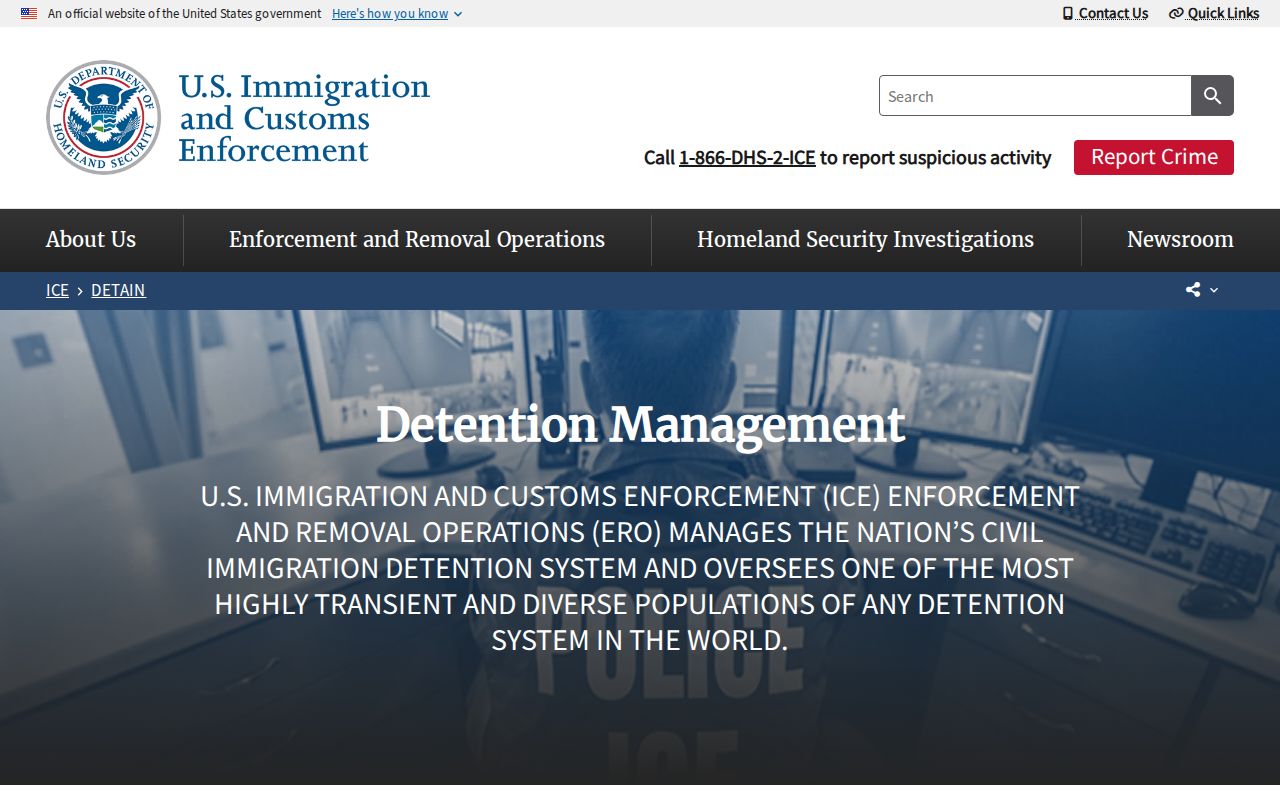
The source supports the custody-transfer distinction. The named person’s BOP, USMS, court, or ICE record must still control.
Federal Custody System Boundaries
The BOP Inmate Locator follows federal sentenced prisoners nationwide. It does not cover an ordinary Jefferson County booking or a Kansas prison sentence. The U.S. Marshals Service can control federal pretrial and transport custody, including contracted detention space. ICE maintains a separate immigration system. Search each only when the case or holding agency supports that route.
“Not in BOP custody” means only that BOP does not currently hold the person. It does not rule out state, county, USMS, ICE, or post-release supervision. Likewise, a release date in the BOP locator records the federal prison event, not the end of every court or supervision obligation. Compare the federal case docket and the proper agency record when the next step matters.
After Federal Custody Release
Keep both identifiers when records cross systems. The federal register number belongs with the BOP result; a Jefferson booking number belongs with the Sheriff record.
The federal court record supplies the legal case history, such as judgment, sentence, modification, or supervised-release action. It is not always the same as a physical-custody log. BOP supplies prison custody data. USMS supplies its prisoner and transport information. A probation office handles federal supervision after release when the sentence includes it. Use the record that answers the exact event.
A person may leave BOP custody and still have a state detainer, immigration matter, local warrant, or federal supervision. None should be inferred from the BOP locator alone. If the person previously appeared at Jefferson County Jail, compare the local booking number and release timestamp with the federal register number and case. Similar names are not enough to merge the records.
Federal locator data may preserve a historic release date, but the locator is not a complete life history or a substitute for a certified agency response. Record the date on which the search was run. When a discrepancy affects a pending court or records matter, contact the agency that created the event and request the existing document.
If KASPER later shows Inmate, the person entered or remained in state prison custody. A parole or postrelease status means secure prison custody ended but state supervision continues. Discharged means the KDOC sentence ended. A court portal record may show dismissal, sentence, or bond action but can lag behind the physical exit. VINELink can provide an alert, yet the reporting agency’s record controls when data conflict.
Keep the custody systems separate. The Sheriff answers for its jail. KDOC answers for Kansas prison custody. District Court holds judicial orders. ICE answers for immigration detention, and BOP covers federal sentenced prisoners. This sequence avoids the common error of treating a blank current roster as proof that all custody and supervision ended.